Chris Teasdale: Being A Neighbor

July 20, 2023 - By Guy Maynard

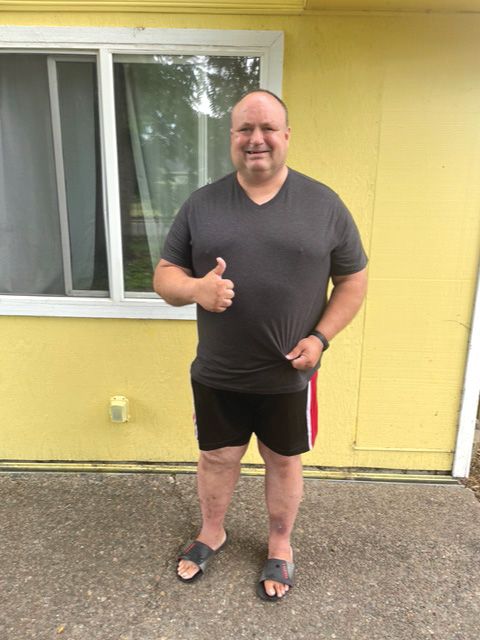
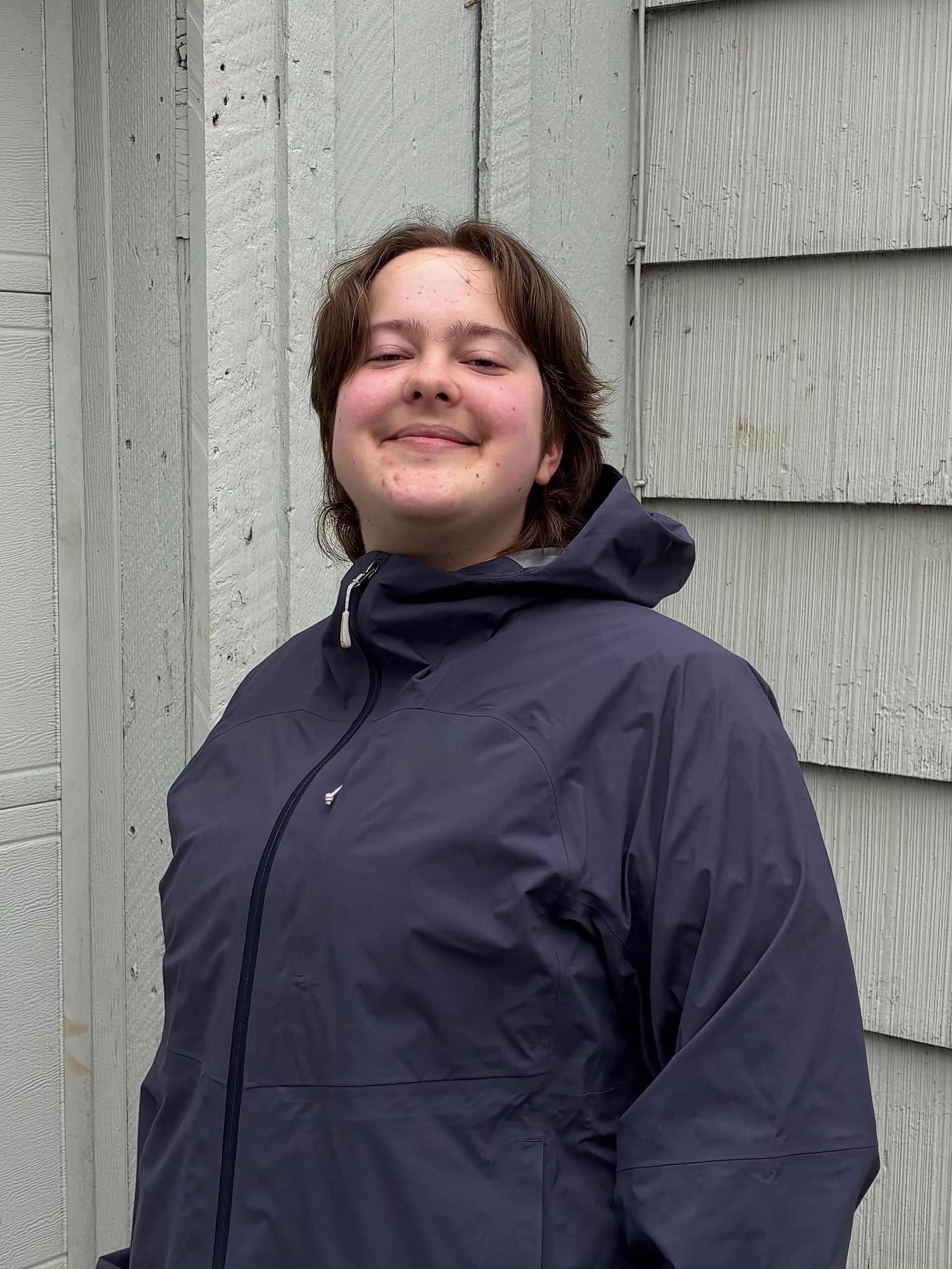
Chris Teasdale has been living for just over a year in the CSS-owned Shields House, not far from where he slept under an awning during the last years of his more than a decade of homelessness. He pays rent and is pursuing job and housing opportunities both on his own and with continuing assistance from CSS staffers. The three people he shares the house with are all, like Chris, former members of the Roosevelt Safe Spot Community. They “go out of their way to help,” he says.


Chris emphasizes that the entire time he was unhoused, “I was trying to find a home and trying to do the right thing.” The problem, he says, is that you run into situations outside of your control, “and that kind of dooms you.” Moving into the Safe Spot helped him regain more control over his life. “[It’s] such a good feeling to have a place to go home to. It gives you a certain amount of freedom. So you don’t have to be a prisoner. You can go there and do your best.” That feeling has only increased at the Shields House.


But even during the last year when he was unhoused and spent most of his nights under that awning, he found community support that helped him until he could get into the Safe Spot. Chris, who is a regular reader of the Bible, cites the story of the Good Samaritan when he talks about the people who made that time “nowhere near as difficult as it should have been.” The Good Samaritan story is about what it means to be a good neighbor. As Eugene enacts revised regulations about where people can and cannot camp, that’s an important concept for us all to consider.

Of his time living on the streets, he says, “Being on the outside, you’re always in a state of flight. It was very difficult to stay there, but I could do it.” The awning he slept under was on private property but he got along with the owner most of the time. Sometimes things involving other unhoused people in the neighborhood upset the owner, and things got strained between them. But Chris attributes that to, “Sometimes you catch people on a bad day, and I think that’s what that was.”


The police left him alone, he says, except sometimes in the winter when it was raining and he was told he couldn’t sleep under an awning. They told him to move on even though it was difficult to find a dry place to sleep. “It’s like there’s a breaking point,” he says. “It’s too much to take in the rain.” But he was never fined and still finds kind words to say about the police. “They’re pretty nice, the Eugene police, they really are.”


Chris’s last period of sleeping on the streets was further complicated when he lost his ID card that gave him access to his disability benefits. Because his expenses were low (“I don’t drink. I don’t smoke.”) and he got food boxes at Catholic Community Services, he decided to try to make it without that income. And he did, with a lot of help from people who saw him as a neighbor. A friend he made at Fred Meyer, Sharon Purdy, gave him one or two gift cards a month and was someone he could talk to. A barber at Fred Meyer gave him the occasional free haircut. Sometimes, he would pull weeds along the EMX bus-line tracks and people would stop and give him a $20 bill. 


Sharon, from Fred Meyer, says she saw Chris often around the store: “I saw him come into the store a couple of times, and I thought he just seems like a good man.” They met when she was eating lunch outside the store one day. “I just wondered what his life was about, and I had some extra lunch, and I offered him some.” She says she found him to be, “very kind; very, very, very genuine; and very humble.” A friendship was born, and a string of kindnesses from Sharon to Chris included buying him a weeding tool with a long handle so he didn’t have to bend over as much, offering him Christmas dinner, and inviting him to attend Mass with her family. “It was out of the ordinary for me,” Sharon says of her reaching out to Chris. “I just think little snippets were given to me to pay attention to. It was just put in me to kind of watch out for him.”

In the Good Samaritan story, a traveler in ancient Israel was set upon by robbers and left along the road half-dead. Two religious men saw him and ignored him. Then the Samaritan, coming from a religious tradition looked down upon by the religion of the wounded man, saw the injured man, stopped, and “had compassion.” He helped treat his wounds, took him to an inn, and paid for his room, telling the innkeeper to take care of him and that he would cover any expenses.


The Bible says that Jesus asked the people he was speaking to, “Who of these three are neighbor to the man who fell among the robbers?” 

“The one who showed mercy,” they replied. “Go and do likewise,” Jesus told them.


“It reminds me so much of [my story],” Chris says. “When they paid for his way at the end, it reminds me so much of CSS because I found my way off the street.” Chris was also aware of his role as a neighbor to others in his community. “When I was out there homeless, I was out there pulling weeds when I could. And just trying to do the best I could.”


The people who take to the other side of the road when they see the unhoused don’t acknowledge them as neighbors. “Sometimes there’s a stigma on the poor or the homeless,” he says, but that perception is wrong because often the circumstances that cause people to become unhoused “just grab you,” like the Biblical robbers grabbed the man who was aided by the Samaritan.


Hearing about the restrictions of Eugene’s new camping ordinance, Chis says, “They seem excessive.” The increase in fines for illegal “camping” from $250 to $500 will mean “they will have to build new jails,” he says. The only real answer to the crisis in Eugene is the availability of more inside beds for the unhoused and especially in low-barrier shelters, he adds.


As for how the housed should relate to the unhoused who they encounter on the street or in the parks, Chris goes back to his Bible: “Do unto others as you would have them do unto you.” Or, as in the lesson from the Good Samaritan story: Be a neighbor to them.
News & Events

To stay connected to CSS, subscribe to our quarterly newsletter. If you are a member of the media who is seeking info, contact community@cssoregon.org.

Subscribe to Newsletter
April 19, 2026
“This is our home,” says Whitney, looking around the new 560-square foot Community Room at the CSS Roosevelt Safe Spot Community, where she lives in a Hut, “I think it really pepped up all of our moods.”
April 18, 2026
“I’ve been in some bad moods, down and depressed or just sad or angry even. Out of curiosity, one day I decided to stop by NAMI, and I never had felt so much happiness and relief. Every time I go, I just feel lifted up. I feel like everything’s going to be OK. Yeah, I love NAMI a lot,” says Jennifer W., a CSS community
April 17, 2026
As our organization continues to grow and evolve, we’re preparing for an important transition in the year ahead. In 2026, Community Supported Shelters will close our two Communities near the Eugene Mission. This change comes as the Mission expands its Life Skills Program, an investment in services that aligns with ou
April 16, 2026
In March, we had our big fundraising concert, featuring a music project by CSS clients, staff, and volunteers! We couldn't have done it without Jason Krueger (Shanty Town band manager and bass player), Truffle Jam, Wildish Theater, Nothing Bundt Cakes, Plank Town Brewing, Springfield Public Schools, and our many in-kin
April 14, 2026
Recent research by the University of Southern California shows that homeless people with pets get placed into permanent residences more than those without animals.
April 5, 2026
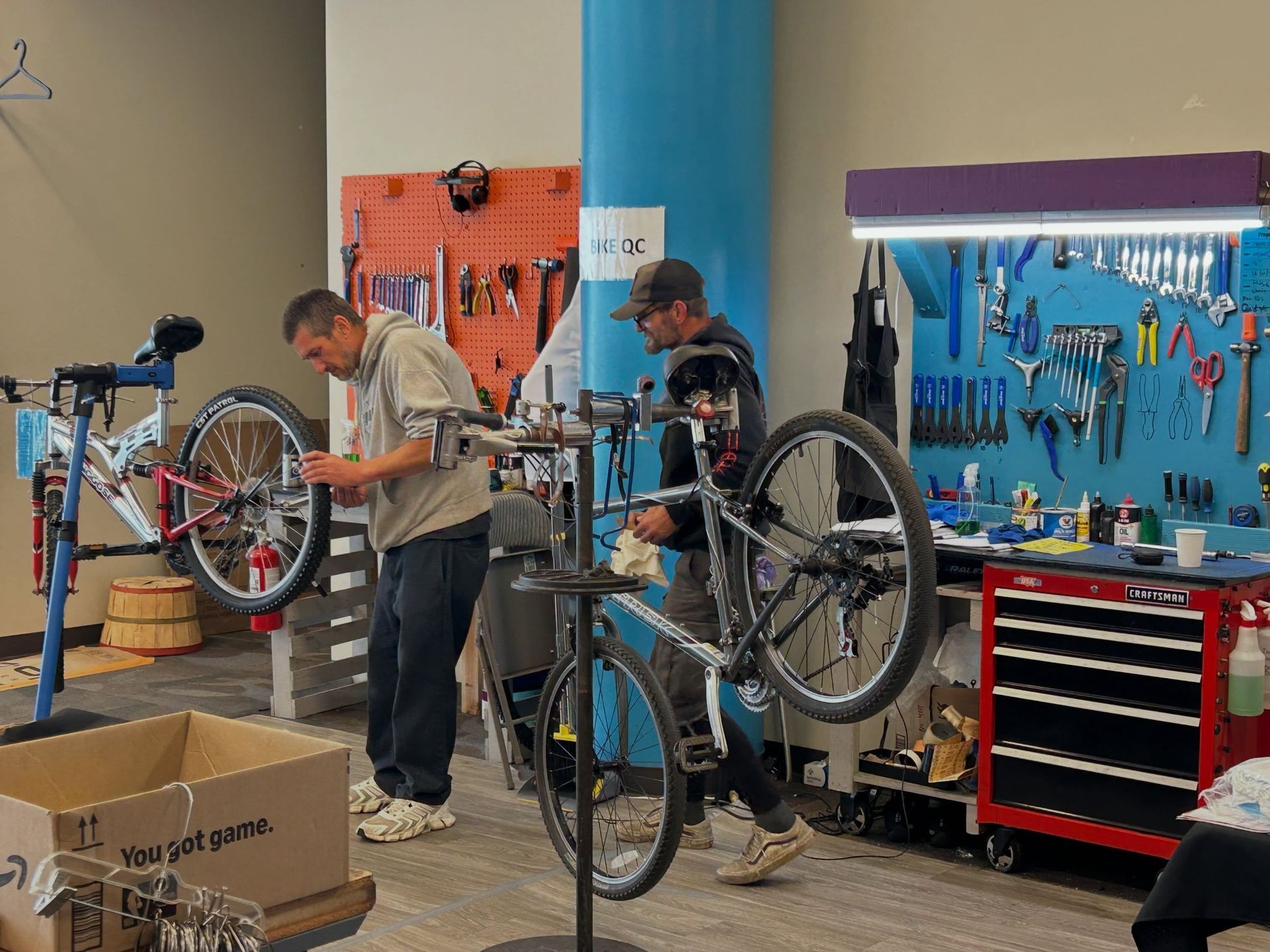
A new workforce development program in Eugene is teaching people living in shelters how to become bicycle mechanics. People like Delanya Clarkson, who came into the program with no mechanical experience. She rides bikes, but has never had the chance to learn more about how they function.
March 16, 2026
Jason Krueger has been in plenty of bands over the years: college bands in Eugene when he attended the University of Oregon, here-and-there jam sessions and Craigslist advertisement tryouts in Portland. His latest band, Shantytown, might be his most important yet.
January 24, 2026
On a sunny January day, Dan, 58, and Robert, 60, worked together on the CSS Maintenance Crew doing restoration work at the Empire Pond Safe Spot Community. Another typical workday for both of them in some ways, but one that neither could have imagined just a year and a half ago. Dan and Robert are brothers who had not
January 23, 2026
The "starving artist" stereotype is well-known. Housed folks often struggle to make an income through art. That difficulty is magnified for unhoused artists, for whom many basic resources are out of reach: good-quality supplies, studio space, and art classes. For that reason, when CSS launched our new Arts Entrepreneur
January 22, 2026
Right now is a scary time for many of the people we serve. Freezing weather brings real and immediate danger. Increased enforcement and the presence of ICE create fear and instability, particularly for immigrant community members. And harmful language and policies at the federal level continue to further criminalize ho
Show More