Class aims to help unhoused people learn to make and sell their own art

By Annie Aguiar • October 27, 2025

This story was originally posted in Lookout Eugene-Springfield.

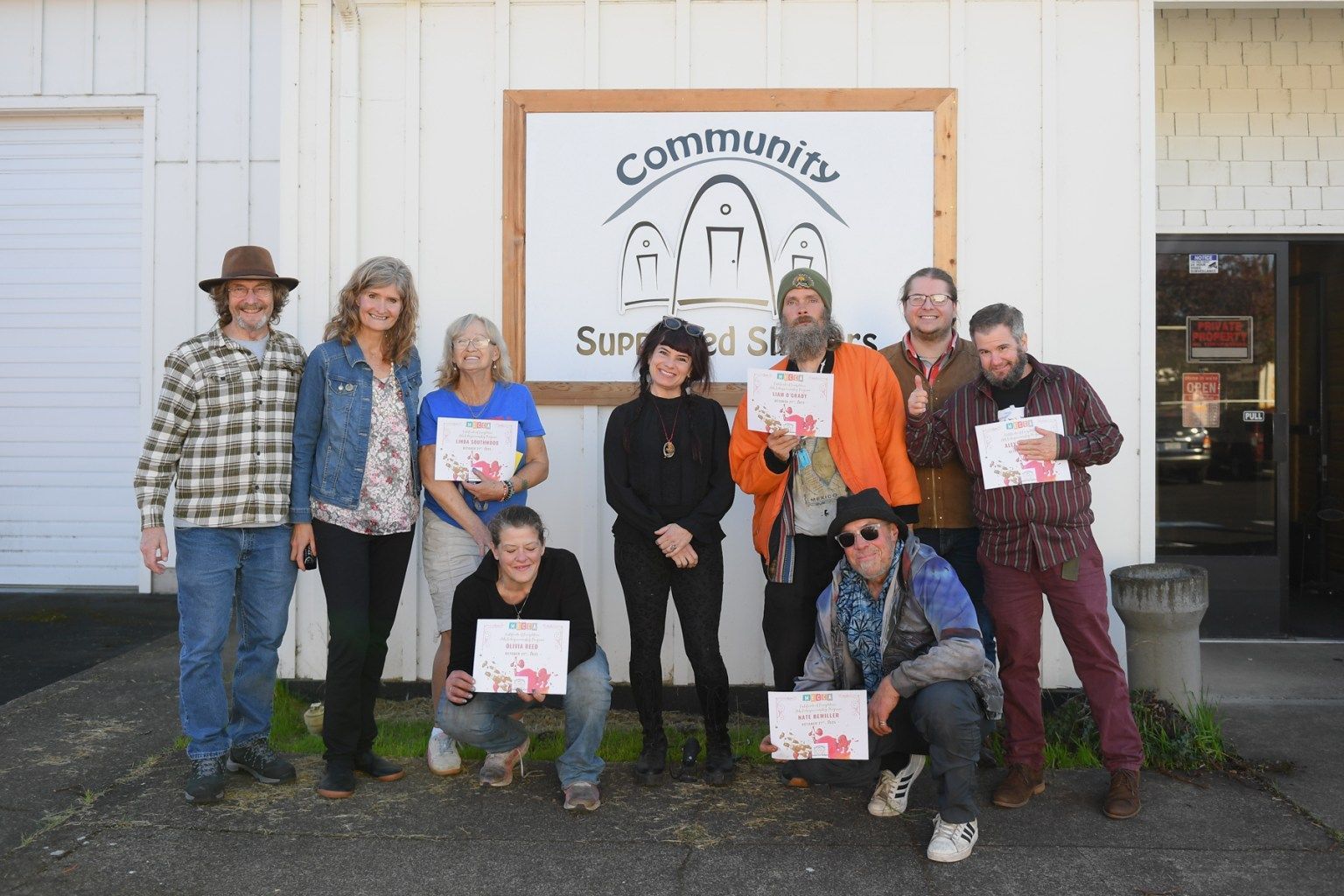
The Community Supported Shelters arts entrepreneurship program graduation in Eugene, Oct. 21, 2025. Credit: Isaac Wasserman / Lookout Eugene-Springfield / Catchlight / RFA

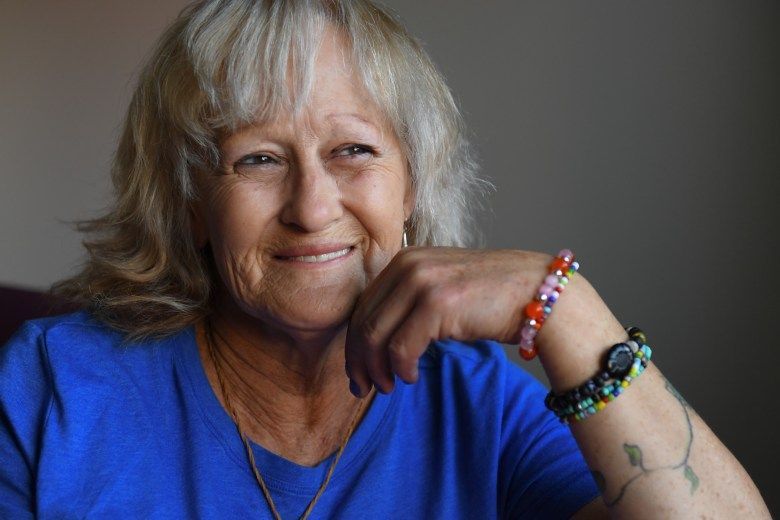
Linda Southwood’s handmade jewelry, she said, is a part of her. 


Making her beaded bracelets and necklaces from reclaimed wood has been a relaxing constant for Southwood, 52, especially after her home burned down three years ago and she struggled to find housing.


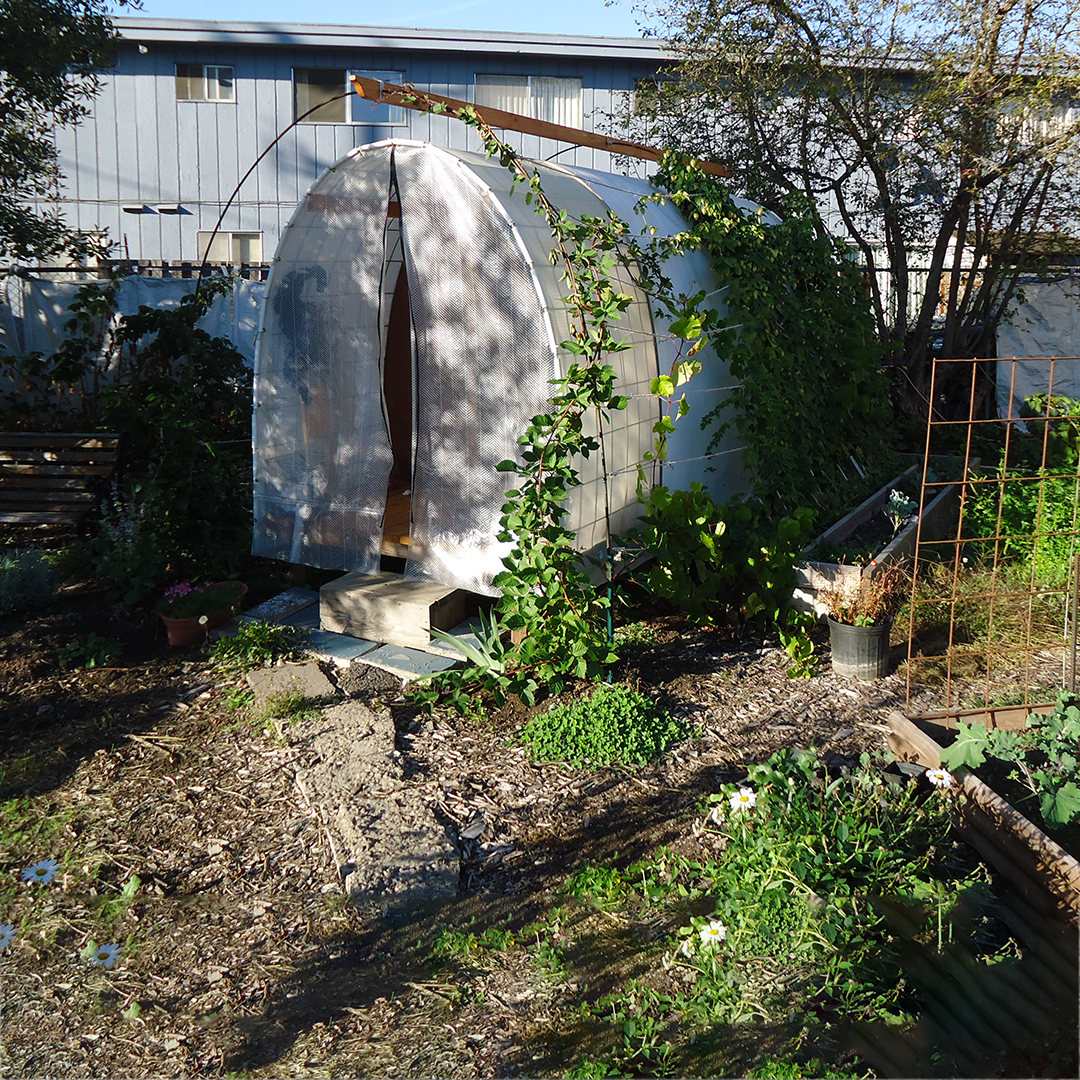
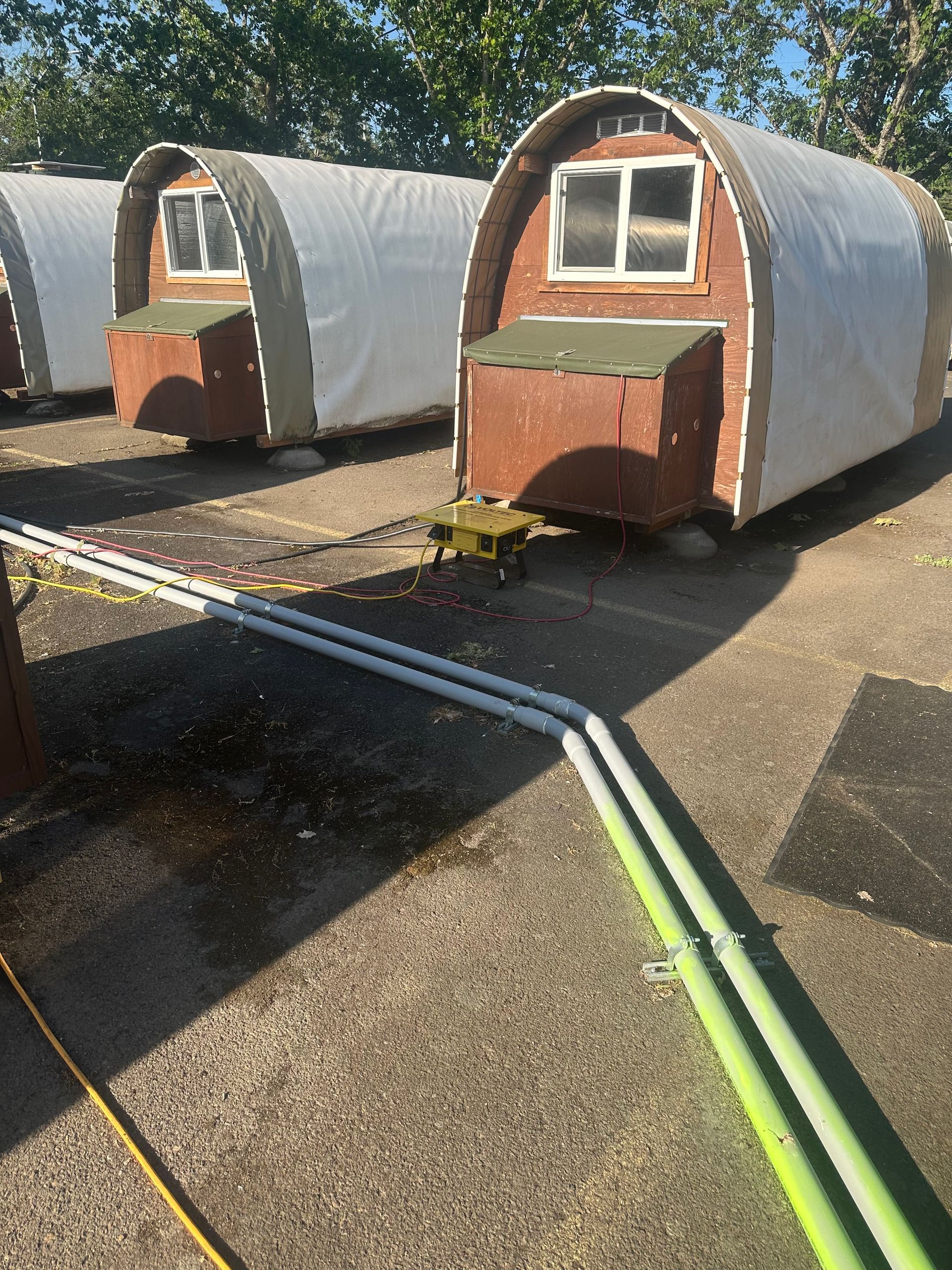
She’s a graduate of a new arts entrepreneurship program teaches people who are unhoused how to build a business from their creative work. The program is run by Community Supported Shelters, a nonprofit that serves Eugene’s unhoused population and which is also known for its Conestoga hut microshelters.


A pop-up market a few weeks ago, for the first group of six students, was a proof of concept. It was the first time Southwood and others had actually been able to sell their work.


“I’m really shy as it is, and for me to sell,” Southwood said. “Before, I wouldn’t be able to sell anything. I would just run away.”

Adapting an art class for unhoused people

Linda Southwood sits for a portrait during the Community Supported Shelters arts entrepreneurship program graduation in Eugene, Oct. 21, 2025. Credit: Isaac Wasserman / Lookout Eugene-Springfield / Catchlight / RFA

The class started when Anna Alkin, program coordinator for Community Supported Shelters, received a text from her boss, co-executive director Heather Quaas-Annsa. It was a screenshot of a listing for a class, “How to Make Money From Your Art,” from Eugene’s secondhand art supply nonprofit MECCA.


Alkin sent a Facebook message to MECCA to get going on adapting a version of the class for clients of Community Supported Shelters.


The class was taught by MECCA’s community engagement coordinator, Mitra Gruwell, who adapted the course for people who are unhoused or living temporarily in one of Community Supported Shelters’ Conestoga huts. 


Gruwell runs a nonprofit called Viking Textile Maker Hub that teaches industrial sewing to unhoused people. So she already knew what changes to make. The students were given studio time and art supplies at MECCA and Radiant Community Arts, to have space and means to make their work.


“With housed people, you wouldn’t bother with ‘how do you get them the art supplies?’” Alkin said. “That’s front and center when you’re working with folks without resources.”
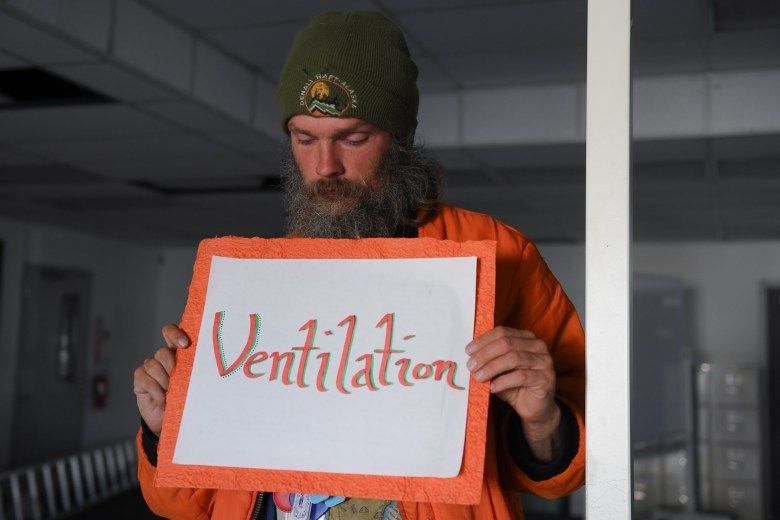
Liam O’Grady stands for a portrait during the Community Supported Shelters arts entrepreneurship program graduation in Eugene, Oct. 21, 2025. Credit: Isaac Wasserman / Lookout Eugene-Springfield / Catchlight / RFA

Gruwell said adapting the class also meant arranging ride shares to sessions, and added discussions on finances.


Not having easy use of a bank account or cellphone to allow customers to pay with Venmo is another obstacle that other art and craft vendors don’t have to consider, Alkin and Gruwell said.


Alkin said grant funding from the Lane Community Health Council helped both pay for the class, and bought cellphones for students who didn’t have them.


“Access to a lot of platforms are resources that other people might just kind of take for granted,” Gruwell said.


Next steps, Alkin said, include making a menu of options for Community Supported Shelters’ clients wanting to sell their art: that might be getting folding tables and movable carts for some vendors, or applying for a Downtown Activity Zone permit to sell on the street for others.


A monthly market that Community Supported Shelters would staff to sell work by clients is also a part of the plan, as well as finding space for client works in smaller markets around town. Alkin said Community Supported Shelters is tentatively scheduling its next round of the class for spring.


What the class has meant to students

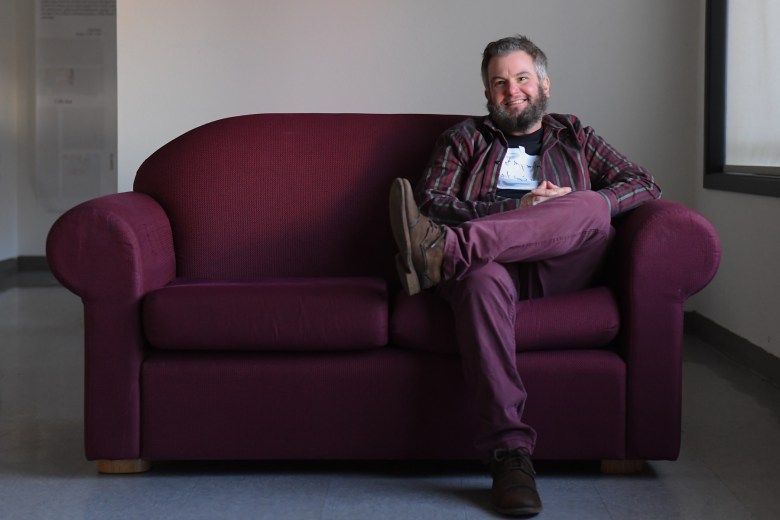
Alex Edwards sits for a portrait during the Community Supported Shelters arts entrepreneurship program graduation in Eugene, Oct. 21, 2025. Credit: Isaac Wasserman / Lookout Eugene-Springfield / Catchlight / RFA

Liam O’Grady, 39, is passionate about etymology, and has a keen focus on word choices in conversation. That led him to his calligraphy-oriented works, illustrating new concepts that he stitches together from parts of different existing words.


He’s tried to sell his work before around the Saturday Market, but didn’t make any sales. The class has taught him the importance of presentation, for when he returns to selling. 


“[It’s about] being conscious of what my setup looks like, having an environment that’s conducive to good business, making sure the customer feels comfortable, having a comfortable layout for whatever the business would be,” he said.


Alex Edwards, 57, refurbishes thrift store picks by sponging paint onto them or applying stencil designs. He said he learned about the class one day after walking into the Community Supported Shelters office. 


“I just said, ‘I want to own my own business,’” he said. “Nobody had said anything else. Then someone said, ‘You don’t say, because this just came in.’”


Now he’s looking to sell his work on Facebook Marketplace. He said the class was especially useful in helping him learn to pay careful attention to setting price points that don’t undervalue his work, but are also attractive to customers.


For Southwood, the jewelry maker, the program is more than a collection of tips on how to sell work. As a Community Supported Shelters client, she’s received housing, a replacement for a stolen phone and help getting shots for two kittens she rescued. But the arts entrepreneurship class is the rare program that takes unhoused people seriously as creative minds.


“I’ve never had that before,” she said. “I feel like they care, and they’re interested in my life.”

News & Events

To stay connected to CSS, subscribe to our quarterly newsletter. If you are a member of the media who is seeking info, contact community@cssoregon.org.

Subscribe to Newsletter
January 24, 2026
On a sunny January day, Dan, 58, and Robert, 60, worked together on the CSS Maintenance Crew doing restoration work at the Empire Pond Safe Spot Community. Another typical workday for both of them in some ways, but one that neither could have imagined just a year and a half ago. Dan and Robert are brothers who had not
January 23, 2026
The "starving artist" stereotype is well-known. Housed folks often struggle to make an income through art. That difficulty is magnified for unhoused artists, for whom many basic resources are out of reach: good-quality supplies, studio space, and art classes. For that reason, when CSS launched our new Arts Entrepreneur
January 22, 2026
Right now is a scary time for many of the people we serve. Freezing weather brings real and immediate danger. Increased enforcement and the presence of ICE create fear and instability, particularly for immigrant community members. And harmful language and policies at the federal level continue to further criminalize ho
January 21, 2026
Major gratitude to the following local businesses: Slice Pizzeria & Bar, Claim 52 Brewing, High Street Tonics, Venue 252, Chambers Grill & Taphouse, and The Embers. Collectively, they've filled about 100 BottleDrop Blue Bags since Thanksgiving, giving us a financial boost while recycling bottles and cans.
December 30, 2025
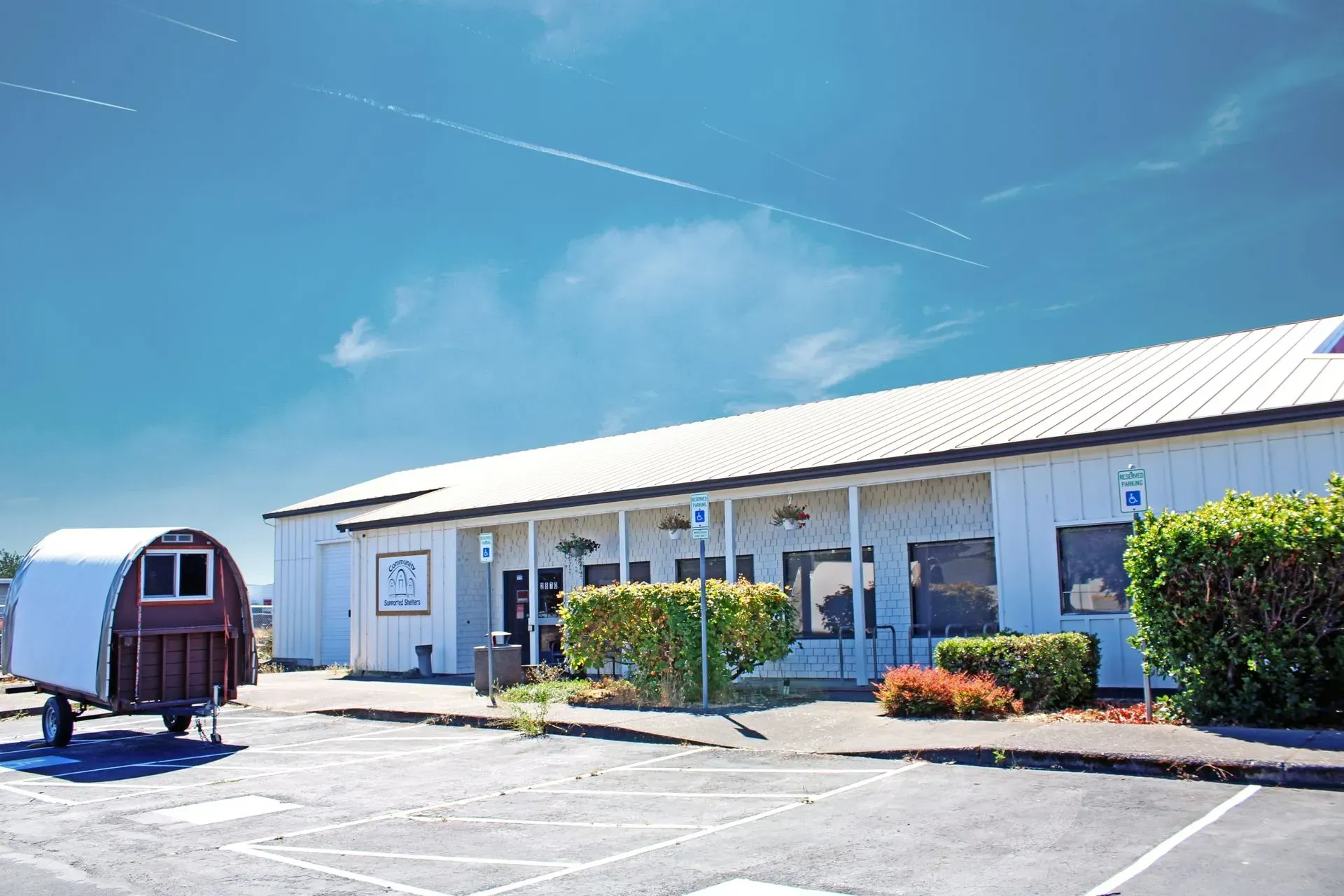
Community Supported Shelters' new main office used to be Eugene's DMV. The building at 2870 W. 10th Place was where Eugene residents got their licenses, registered their vehicles and replaced their license plates from 1985 to 2021. Eugene's DMV is now located at 499 Valley River Center. It moved in 2022.
December 18, 2025
“I’m excited! I can’t wait! I mean, I can plug in stuff. I can go to sleep. I can lock my door!” – Joshua Most of us take these simple things almost entirely for granted. Having access to electricity. Having a place to sleep where you feel safe and secure. But, for Joshua, and the 56 other Lane County households who a
December 9, 2025
Workers at Community Supported Shelters make do in a cramped space where they share desks and have no space for private meetings with the unsheltered people they serve. The Eugene nonprofit has grown rapidly in recent years, expanding its roster of huts where people can live off the streets. Today there are more than
November 19, 2025
Zechariah Boesman was homeless for most of his life. He spent his childhood touring practically “every homeless shelter across America” and landed as an adult in Oregon, where he lived on the streets until a workplace injury convinced him to apply for a tiny home with Community Supported Shelters.
November 16, 2025
Blake Burrell: "For anyone that's ever moved in with roommates, moving 20 people in at one time can be really challenging. So we are taking that incremental approach and are looking somewhere by probably about  July or August, having 20 folks on that property."
October 31, 2025
As we move deeper into fall and prepare for the cold months ahead, we want to share an update on our work and a reflection on what this season means for our community. Recent policy changes and funding reductions across Oregon are already having consequences for people experiencing homelessness. New SNAP rules are e
Show More