Could Oregon Trail wagons provide an unlikely solution to the housing crisis?: Season of Sharing 2025

By Zane Sparling • Nov 19, 2025

This story was originally published in OregonLive here.

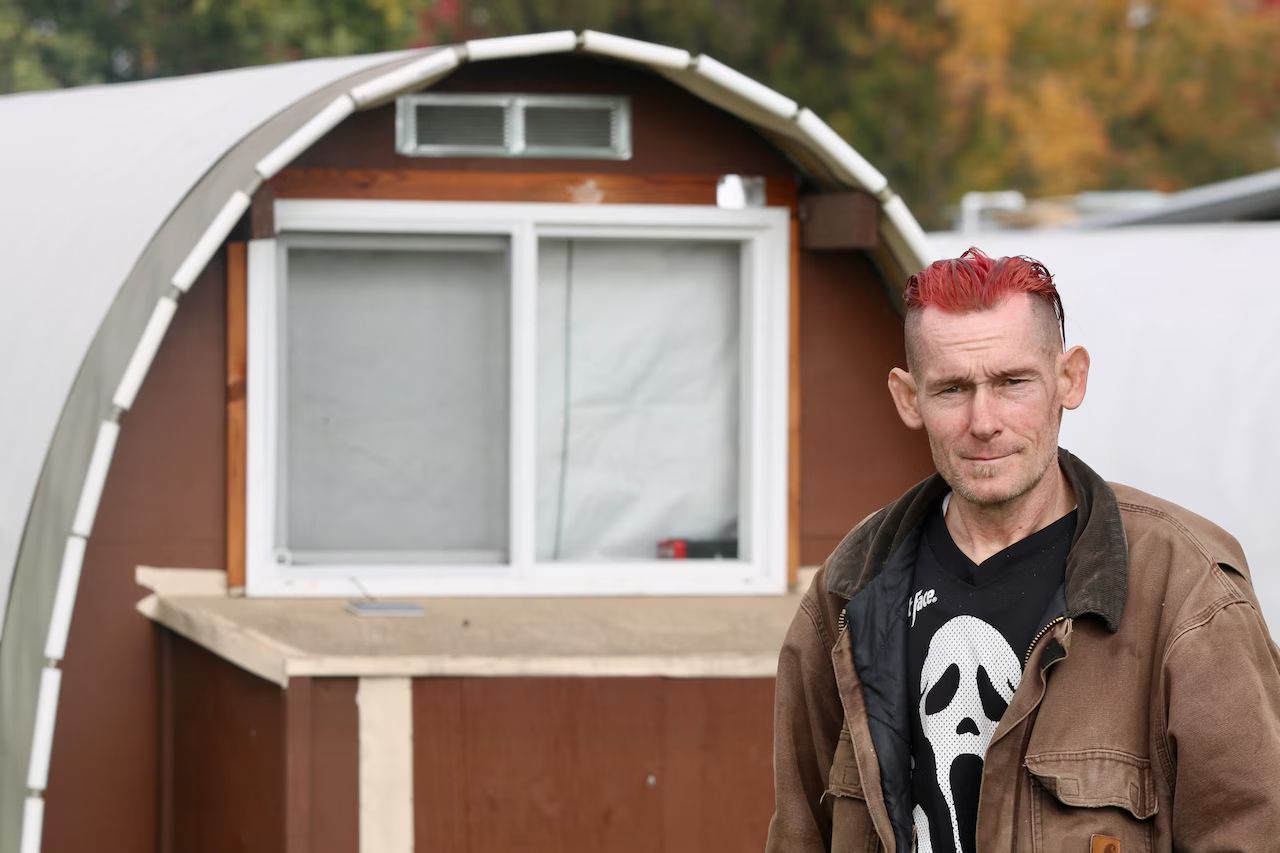
Zechariah Boesman was homeless for most of his life.


He spent his childhood touring practically “every homeless shelter across America” and landed as an adult in Oregon, where he lived on the streets until a workplace injury convinced him to apply for a tiny home with Community Supported Shelters.


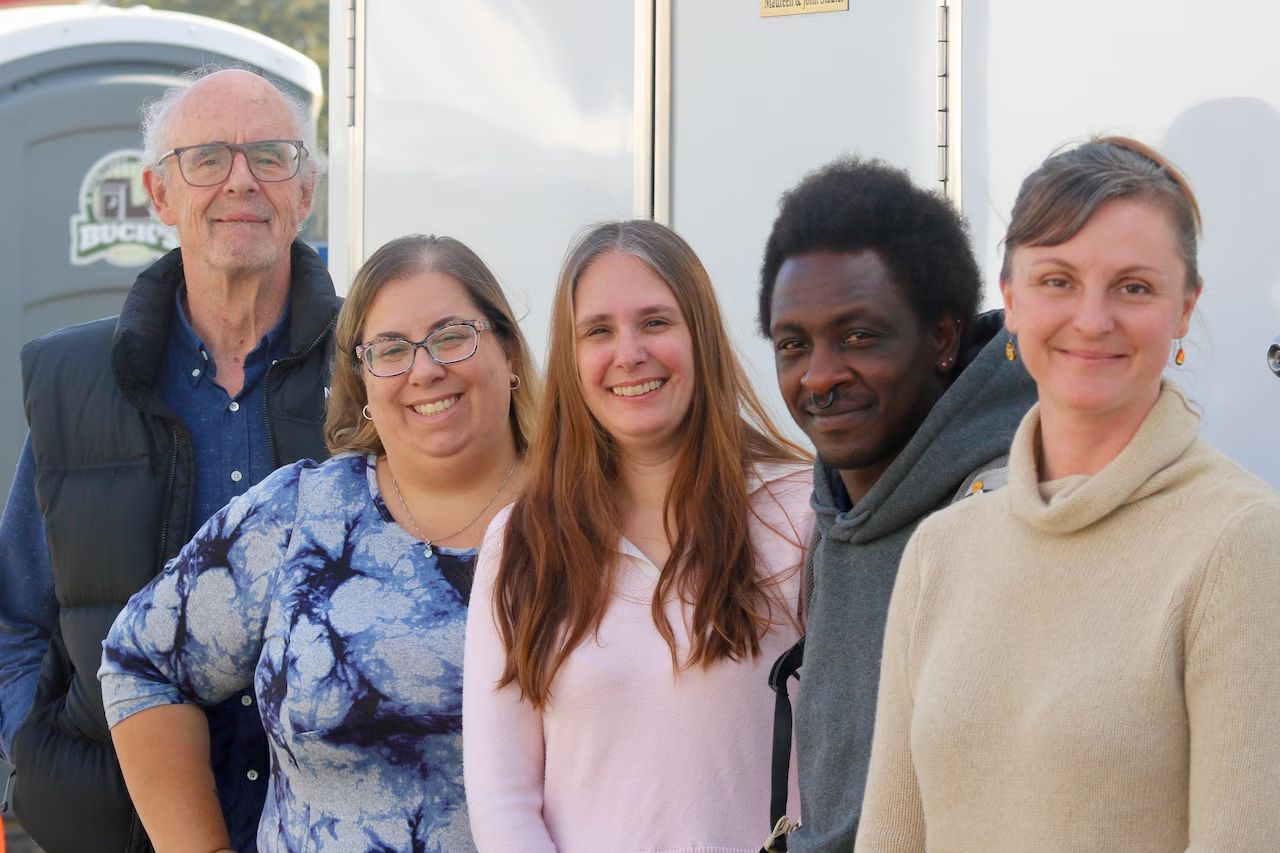
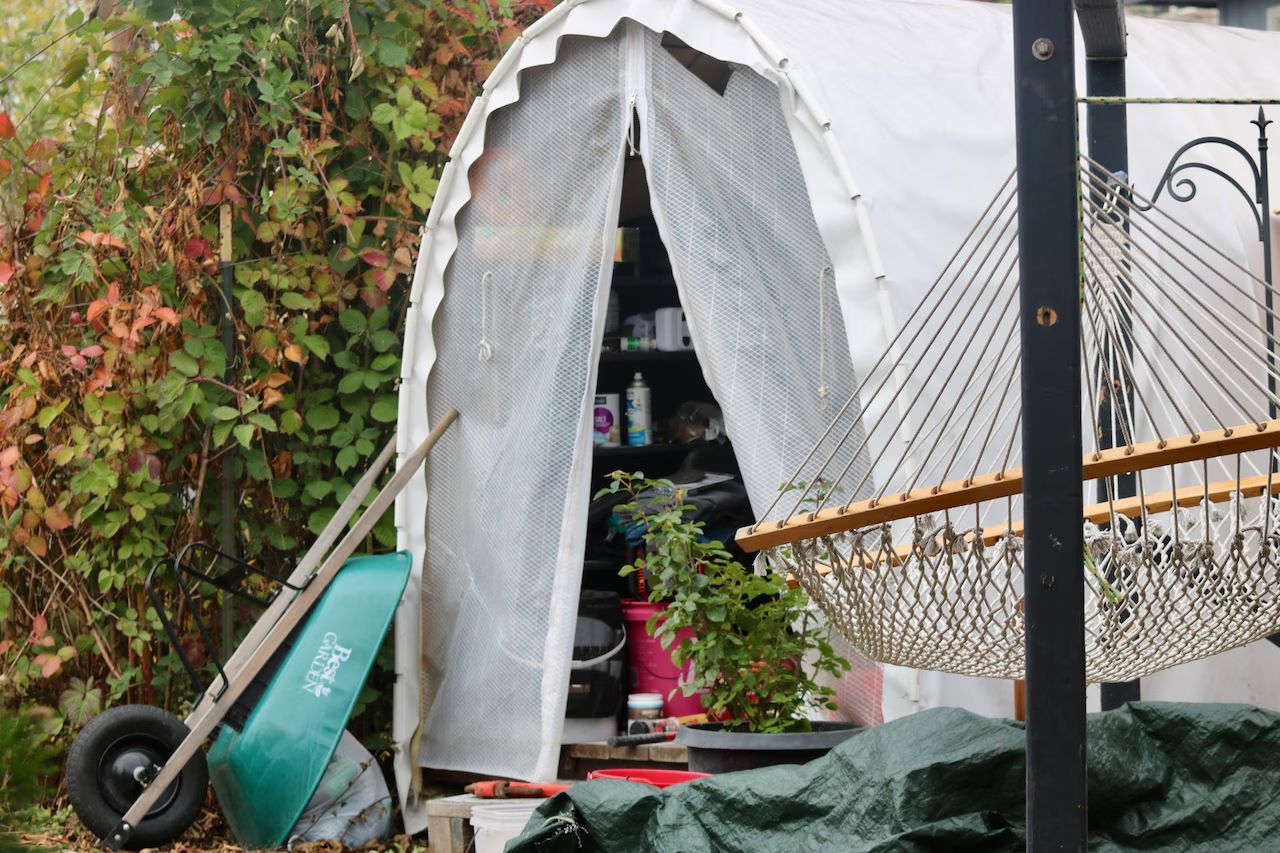
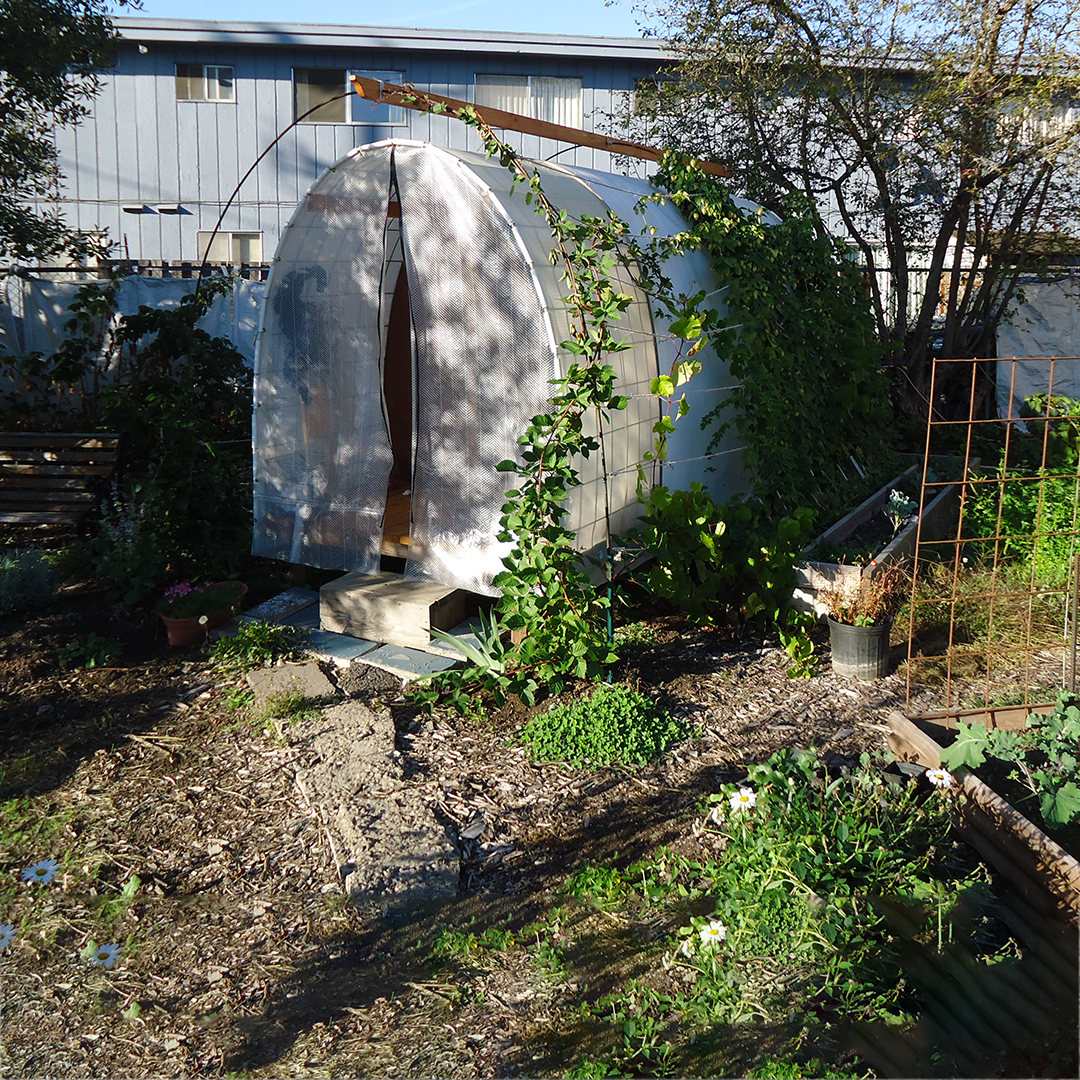
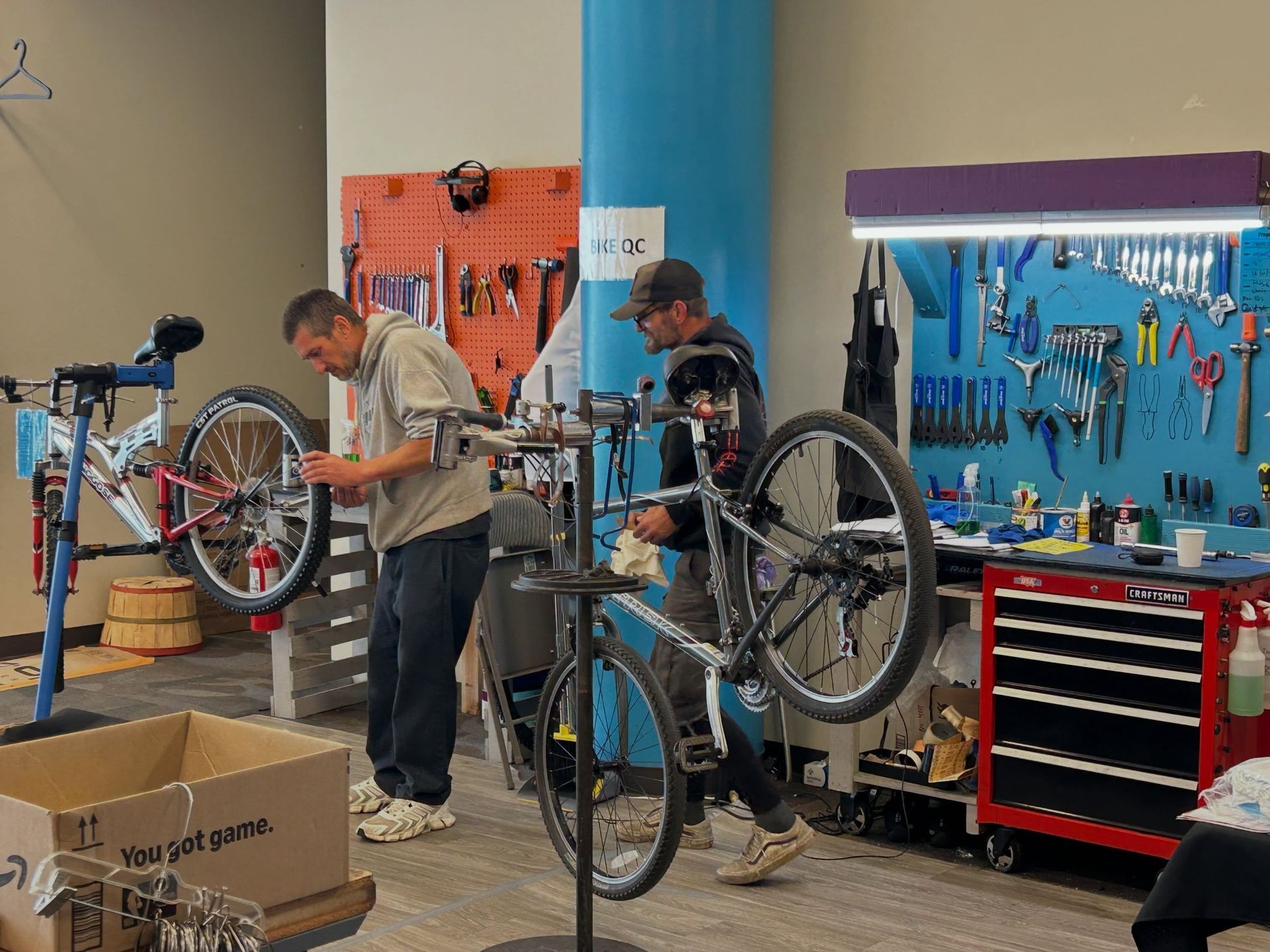
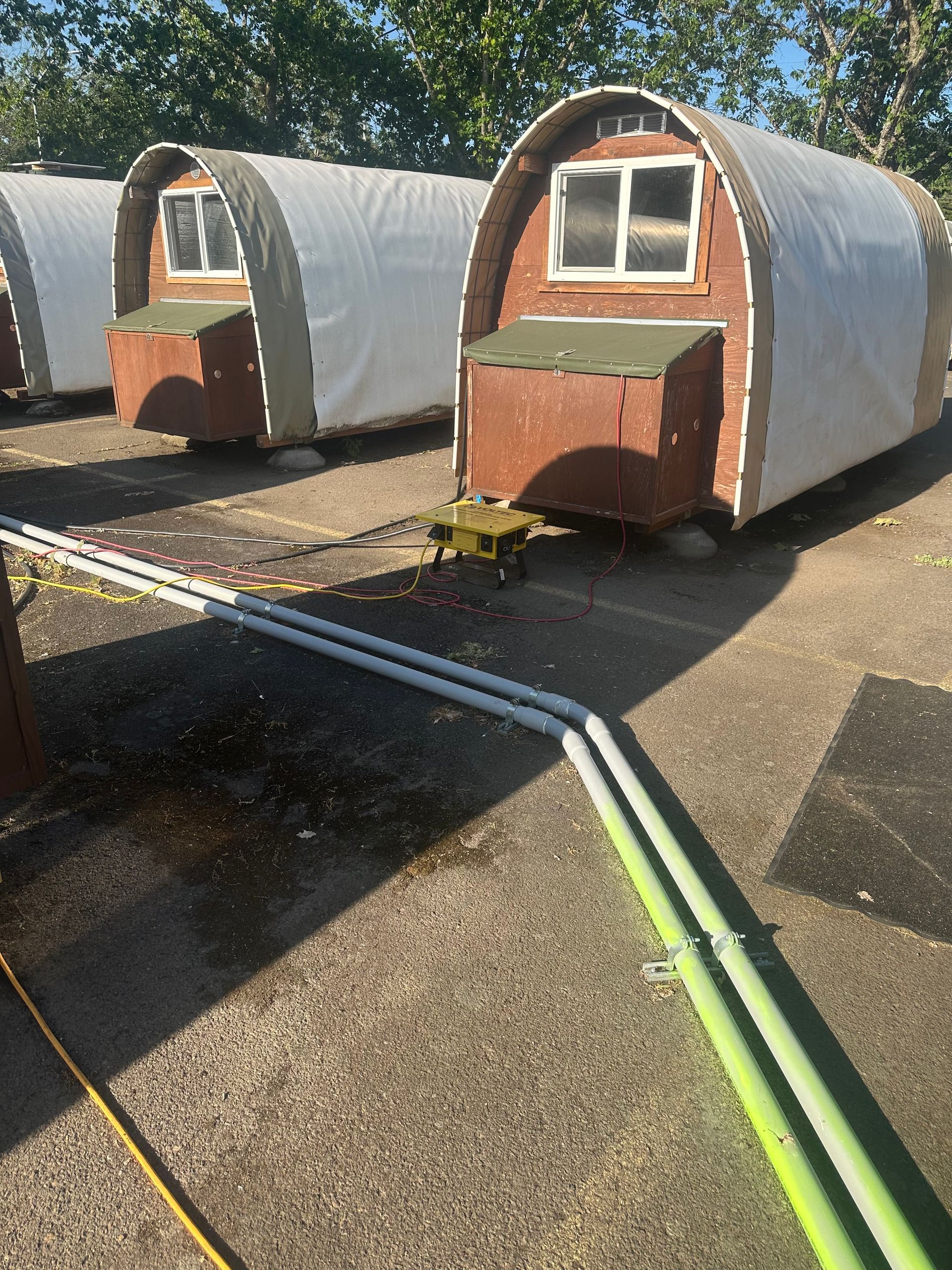
Four years later, Boesman now works as a maintenance technician for the Eugene nonprofit, helping to refurnish the canvas-covered structures called “Conestoga Huts” because their curved roofs resemble the wagons used by settlers on the Oregon Trail.


> Donate to Community Supported Shelters or the Season of Sharing general fund. You can also Text the code Season2025 to 44-321.


“It’s like a stepping stool, and it makes you feel like a human,” Boesman, 45, said of living in one of the huts. “It’s just refreshing to know that this organization takes the time and cares the way they do.”


Founded in 2013 as a way to add housing to underused church parking lots, Community Supported Shelters now oversees 171 huts in 14 scattered sites across Eugene. The nonprofit runs on a shoestring budget of roughly $2.5 million.


The charity is a beneficiary of The Oregonian/OregonLive’s 2025 Season of Sharing holiday fundraising campaign. And as it happens, Community Supported Shelters is in the midst of a major capital campaign to upgrade its headquarters.


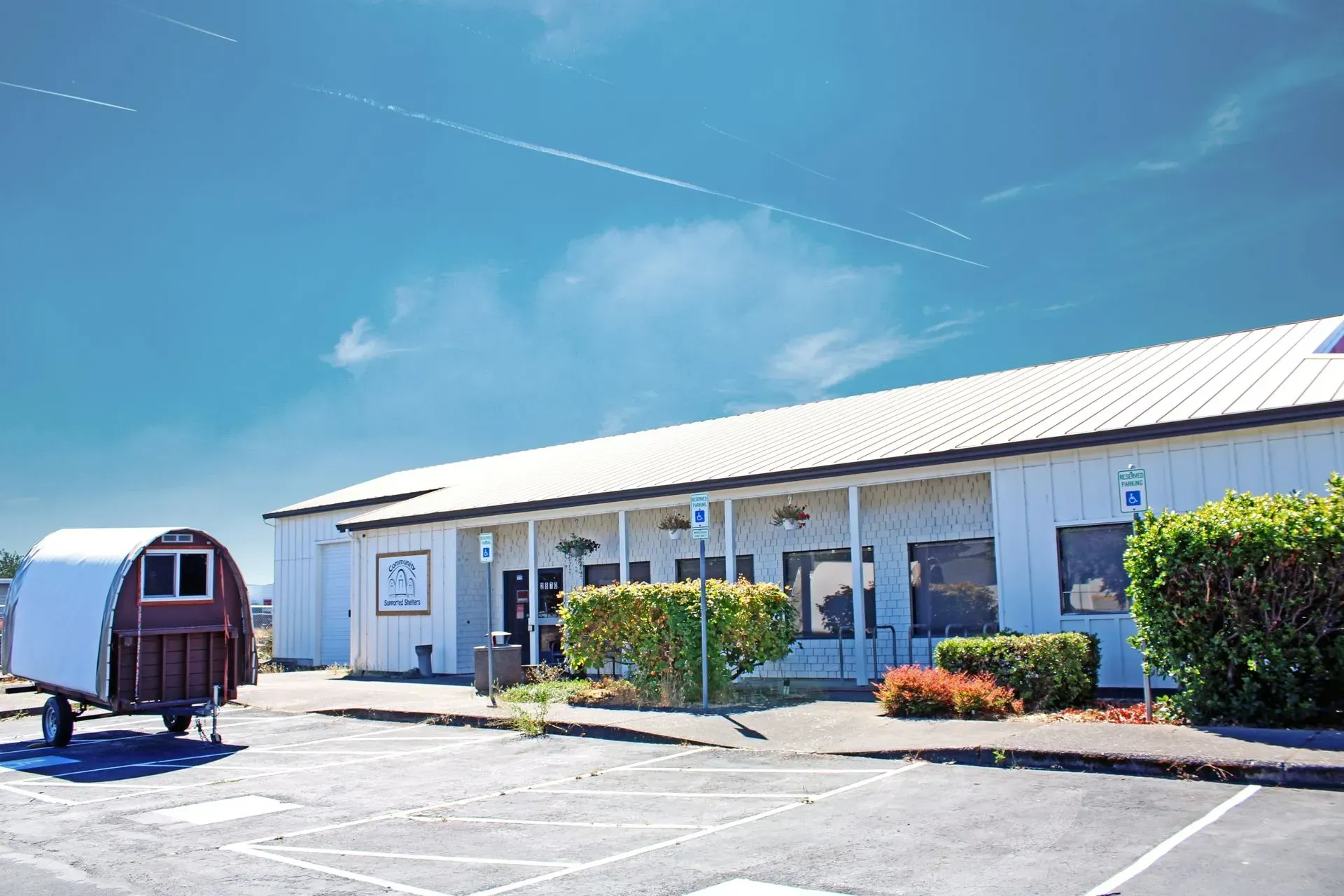
At present, Community Supported Shelters operates out of a former workshop, with corrugated metal walls and a wood-burning stove for central heating. The nonprofit has about 40 employees but only room for five or six desks, and just three dedicated parking spots.


The organization purchased the former Oregon Department of Driver and Motor Vehicle Services building, 2870 W. 10th Place, for about $1.3 million earlier this year — but is hoping to raise more funds for renovations.
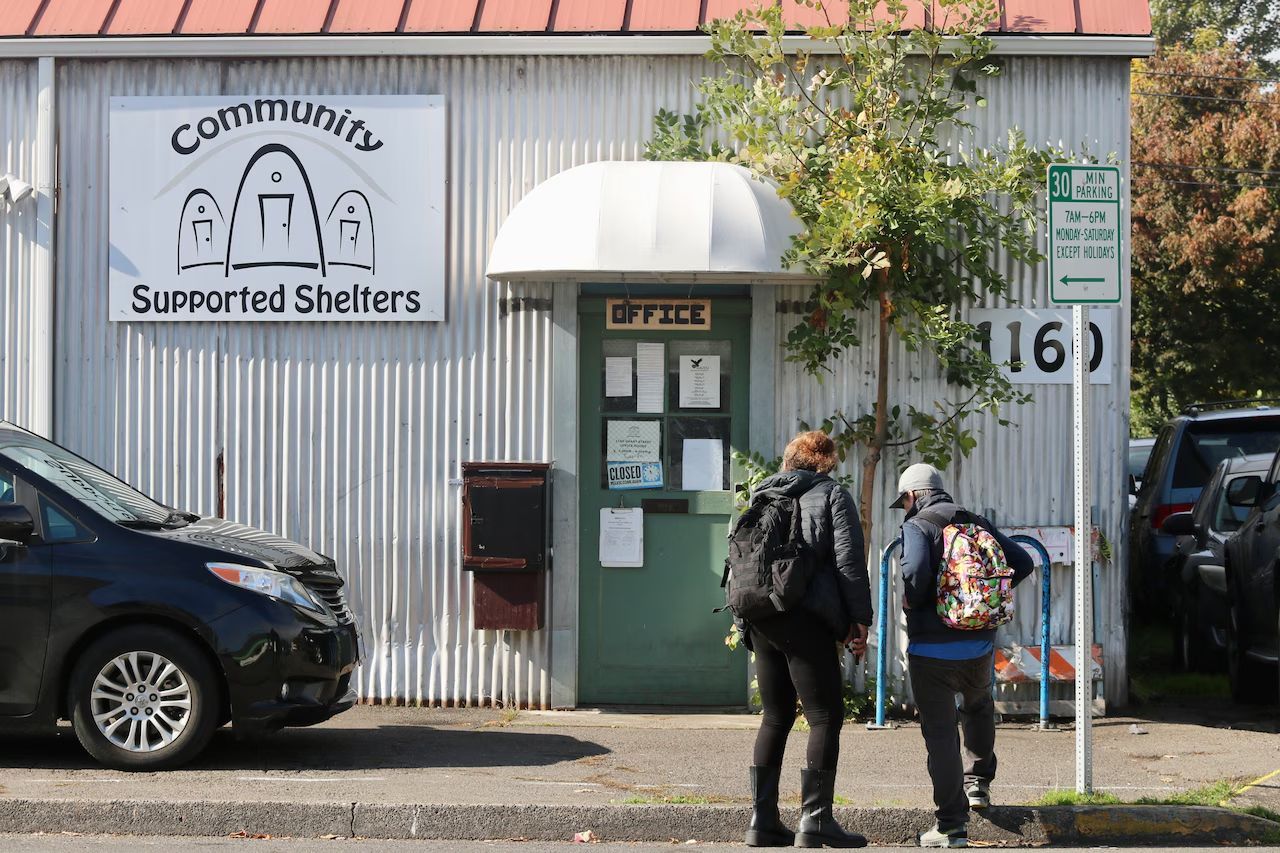
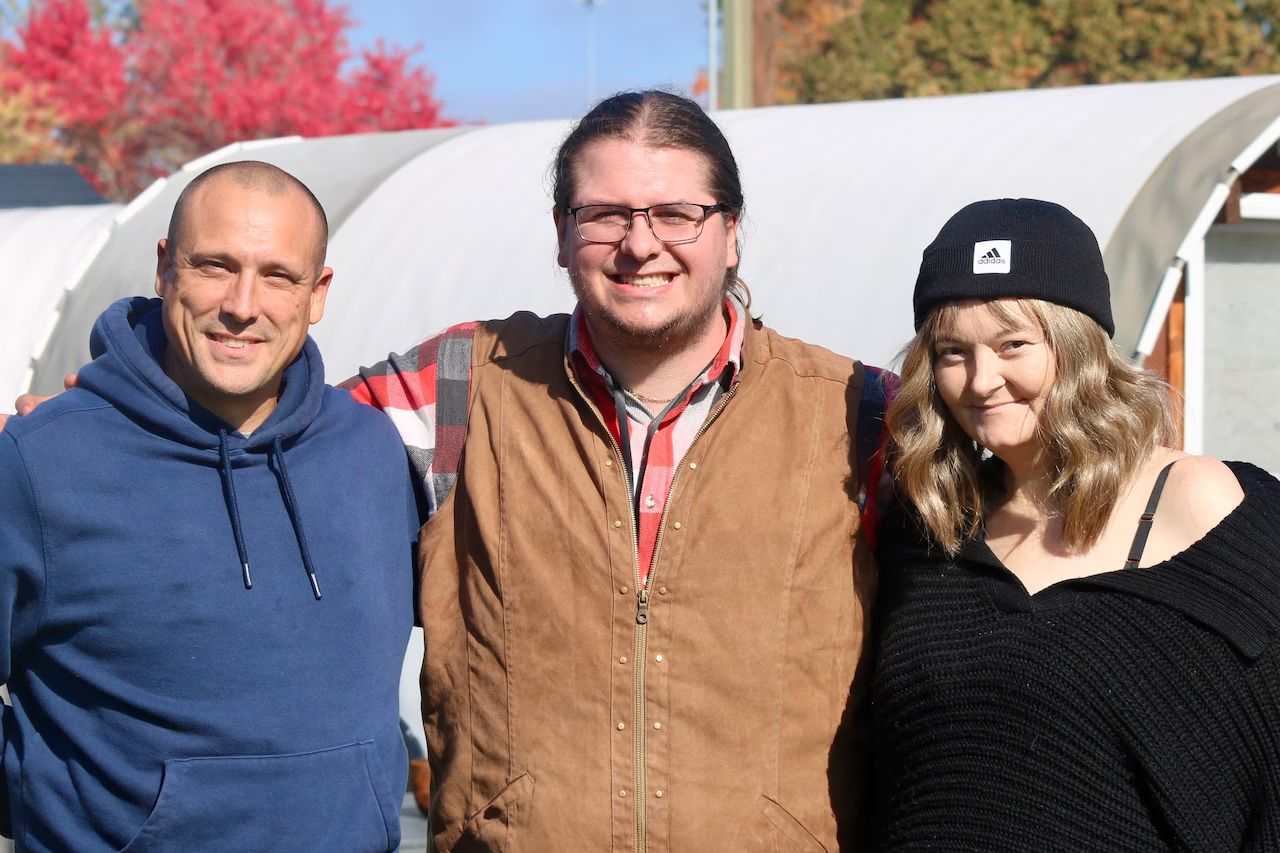
If funded, the plans call for new interior walls, a full kitchen, pantry, storeroom and expanded restrooms, as well as a less institutional paint scheme. The office could host employment classes as well as administrators and a few dozen volunteers dubbed “hut crews.”


There are more than 3,500 people living in tents and derelict vehicles in Lane County, according to federal data. Community Supported Shelters’ mission is to make sure each of them has a safe place to rest, recover and rebuild their life.


“We put our focus on delivering services and finding robust models for housing people,” said Blake Burrell, one of two co-executive directors at the nonprofit.

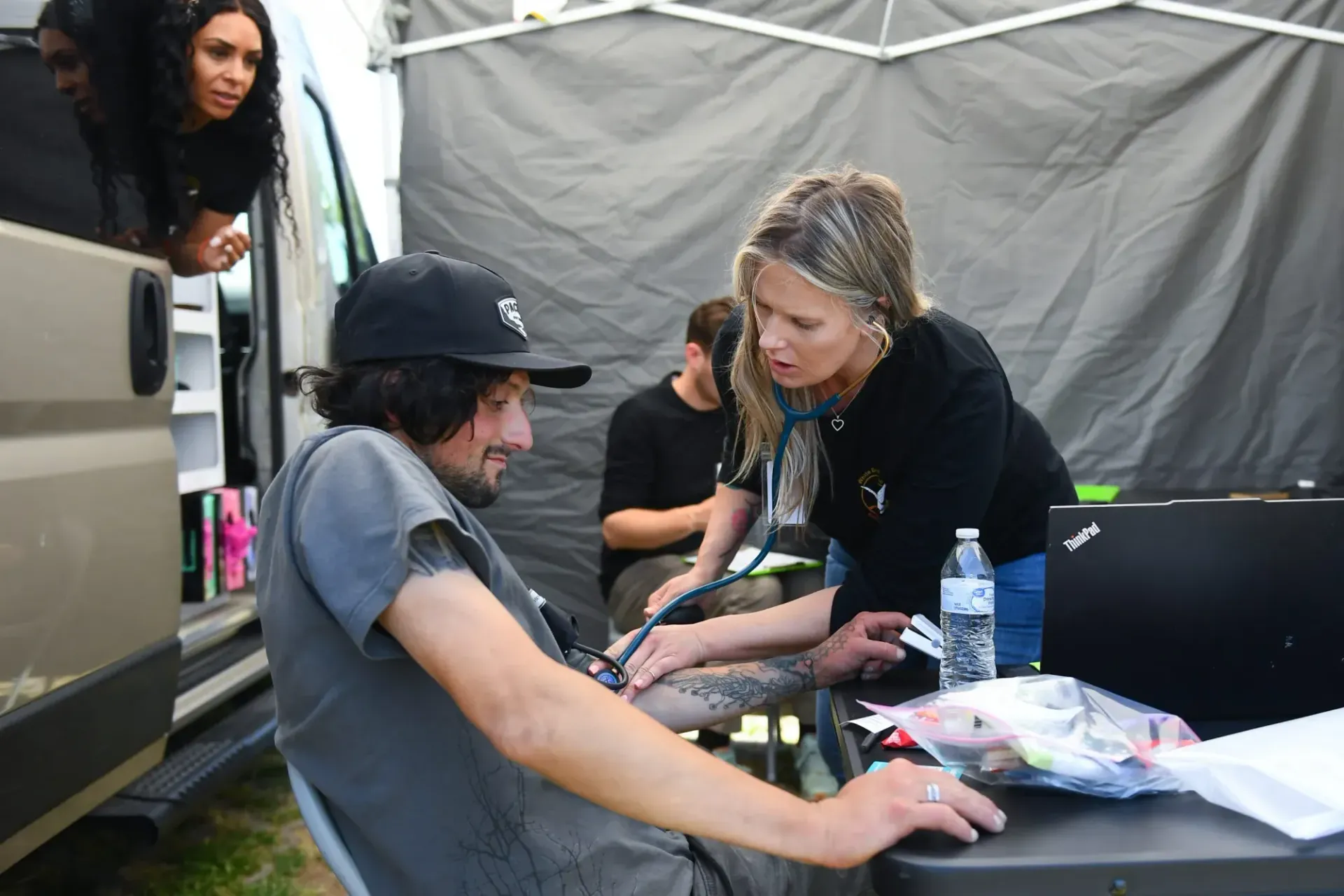
Community Supported Shelters will continue to operate a separate Access Center on West 11th Avenue, where those living on the streets can take a shower, do their laundry or get a haircut. Vital supplies, ranging from food to the anti-overdose drug Narcan, are also provided.


A team of five service navigators never knows who might walk through the door of the Access Center, according to Mellinda Poor, who oversees the team. Some days might start with convincing someone to go to urgent care or triaging a mental health crisis.


“It’s really about addressing all of their needs, because that is how people move forward and stabilize and become successful,” Poor said.


Her team also helps homeless clients with paperwork, job applications or help put them on a housing waitlist, which typically stretches for two to three years for Section 8 vouchers.


The wait is often shorter for one of the nonprofit’s huts. They have no heating or air conditioning — electricity, when it is available, is provided by solar panels — but offer 60 square-feet of living space behind a locking door.


On a recent visit to one of the nonprofits’ Safe Spot Communities, several rows of Conestoga huts were nestled between the city’s Skinner Butte Park and the elevated spur of Interstate 105.


One resident walked his dog, as both pets and partners are allowed. The shelters are considered “low barrier,” because sobriety is not required.


“A lot of folks think that people are unhoused because they have sobriety issues, and it’s typically the opposite,” co-executive director Heather Quaas-Annsa said. “They struggle with substance use because they’re unhoused.”


D.J. Williams is a former resident who’s now making rent on a market-rate townhome — but only thanks to his hustle. The 40-year-old runs his own janitorial business and works as a dishwasher at two local restaurants on the side.

Williams said having the hut made working easier, because he knew his belongings wouldn’t be stolen while he was away.


“I’m a self-motivated person,” he said, “so I just needed somewhere to lay my head.”


What your donation can do

$10: Covers the cost of one housing application to a private landlord, thanks to a recent ordinance passed by the Eugene City Council.


$50: Funds a cell phone to an unhoused community member, which is crucial for staying on top of appointments, accessing medical care and applying for jobs.


$100: Provides a warm meal for 20 people, or roughly the entire community at one of Community Supported Shelters’ Safe Spot Communities.

News & Events

To stay connected to CSS, subscribe to our quarterly newsletter. If you are a member of the media who is seeking info, contact community@cssoregon.org.

Subscribe to Newsletter
January 24, 2026
On a sunny January day, Dan, 58, and Robert, 60, worked together on the CSS Maintenance Crew doing restoration work at the Empire Pond Safe Spot Community. Another typical workday for both of them in some ways, but one that neither could have imagined just a year and a half ago. Dan and Robert are brothers who had not
January 23, 2026
The "starving artist" stereotype is well-known. Housed folks often struggle to make an income through art. That difficulty is magnified for unhoused artists, for whom many basic resources are out of reach: good-quality supplies, studio space, and art classes. For that reason, when CSS launched our new Arts Entrepreneur
January 22, 2026
Right now is a scary time for many of the people we serve. Freezing weather brings real and immediate danger. Increased enforcement and the presence of ICE create fear and instability, particularly for immigrant community members. And harmful language and policies at the federal level continue to further criminalize ho
January 21, 2026
Major gratitude to the following local businesses: Slice Pizzeria & Bar, Claim 52 Brewing, High Street Tonics, Venue 252, Chambers Grill & Taphouse, and The Embers. Collectively, they've filled about 100 BottleDrop Blue Bags since Thanksgiving, giving us a financial boost while recycling bottles and cans.
December 30, 2025
Community Supported Shelters' new main office used to be Eugene's DMV. The building at 2870 W. 10th Place was where Eugene residents got their licenses, registered their vehicles and replaced their license plates from 1985 to 2021. Eugene's DMV is now located at 499 Valley River Center. It moved in 2022.
December 18, 2025
“I’m excited! I can’t wait! I mean, I can plug in stuff. I can go to sleep. I can lock my door!” – Joshua Most of us take these simple things almost entirely for granted. Having access to electricity. Having a place to sleep where you feel safe and secure. But, for Joshua, and the 56 other Lane County households who a
December 9, 2025
Workers at Community Supported Shelters make do in a cramped space where they share desks and have no space for private meetings with the unsheltered people they serve. The Eugene nonprofit has grown rapidly in recent years, expanding its roster of huts where people can live off the streets. Today there are more than
November 16, 2025
Blake Burrell: "For anyone that's ever moved in with roommates, moving 20 people in at one time can be really challenging. So we are taking that incremental approach and are looking somewhere by probably about  July or August, having 20 folks on that property."
October 31, 2025
As we move deeper into fall and prepare for the cold months ahead, we want to share an update on our work and a reflection on what this season means for our community. Recent policy changes and funding reductions across Oregon are already having consequences for people experiencing homelessness. New SNAP rules are e
October 30, 2025
Since the inception of the CSS workforce development program in 2024, it has become clear that not everyone is interested or able to work in a traditional workplace. It can be quite the challenge to locate jobs that are part time, supportive, accessible to folks with disabilities or criminal history, to name but a few
Show More