A new sense of purpose emerges from connections between a father and son and NextStep and Community Supported Shelters.
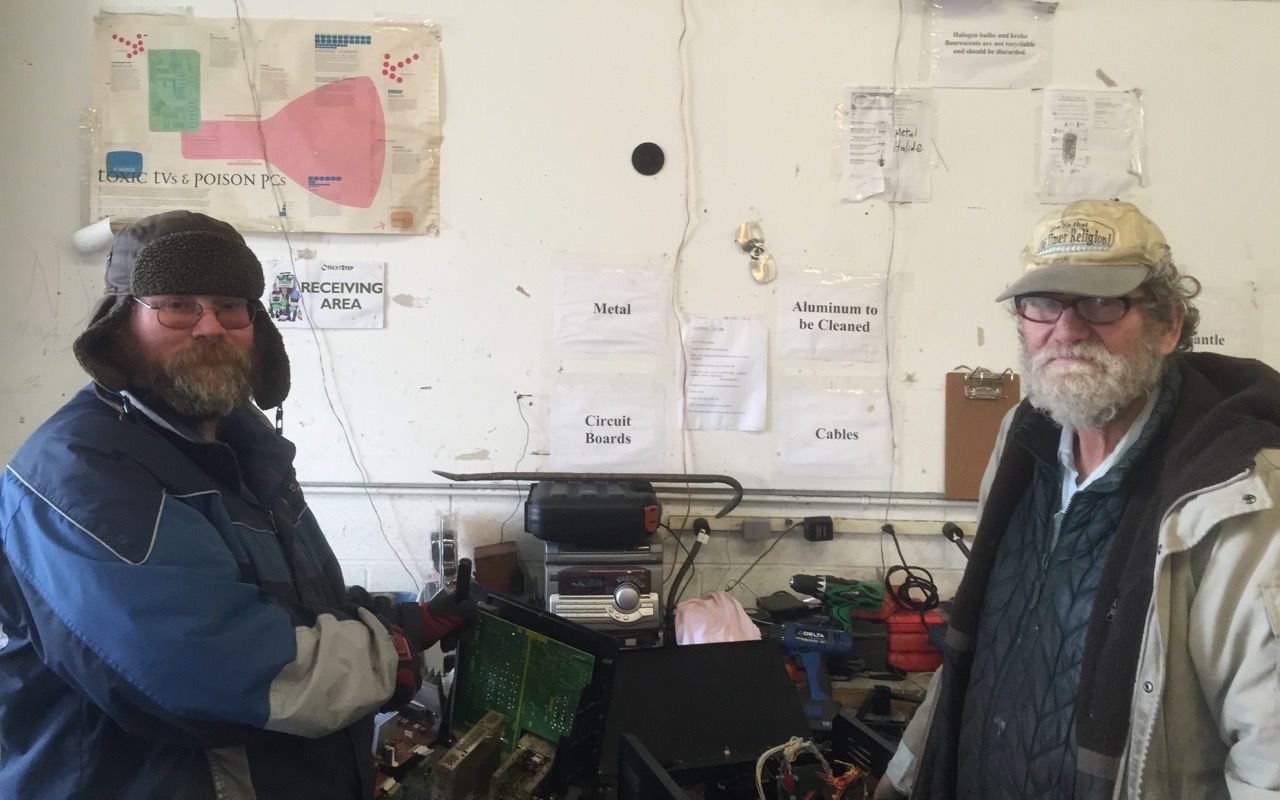
It’s an all-American scene. A father and a son at a workbench, eyes fixed on the task at hand, tools and hardware spread out in front of them, hands busy with screwdrivers and pliers and drills, working with clear purpose at screws and bolts and tangles of wire. Not much need for any words.
Ray Shields and his son Jonathan are dismantling electronic components donated to NextStep Recycling, a Eugene nonprofit that recycles used electronics, makes technology accessible to low-income people, and provides job training to at-risk population groups.
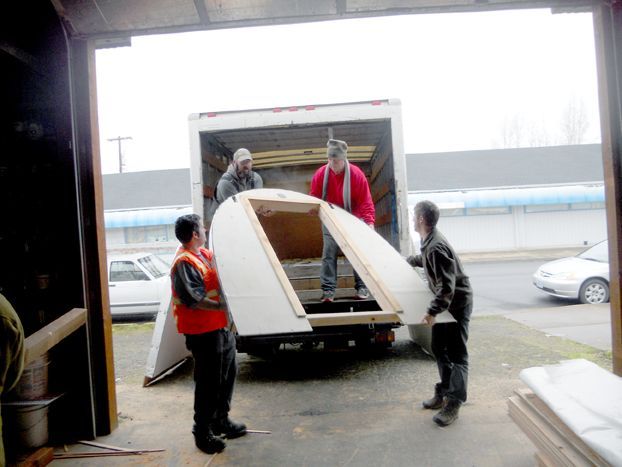
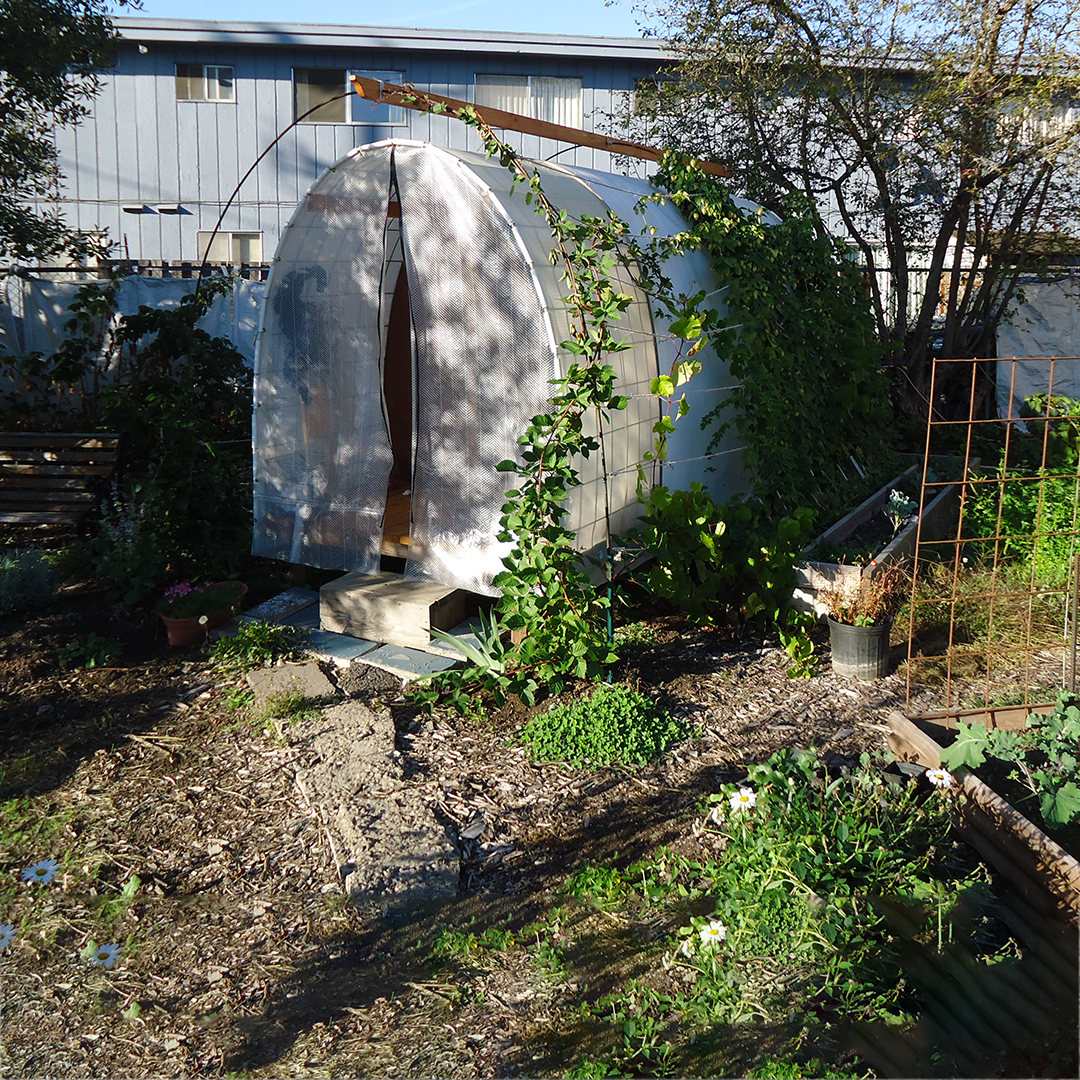
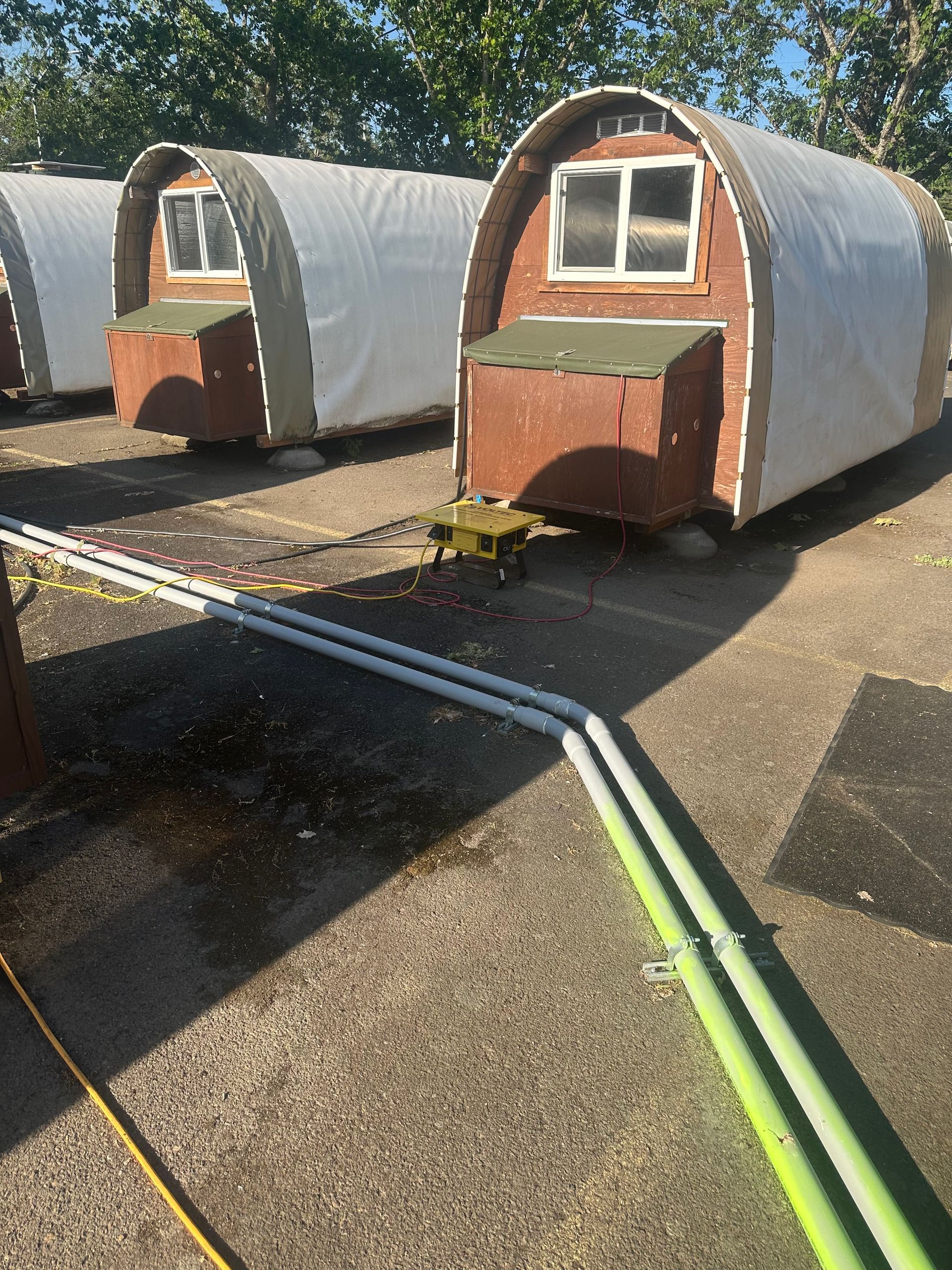
Ray and Jonathan live together in a Conestoga Hut at the Roosevelt Safe Spot, managed by Community Supported Shelters. They are volunteers and they like what they do.
“I like to take things apart,” says Jonathan, 36, with a smile.
“I like to tinker,” says Ray, 66, with a similar grin, “whether it’s a bicycle or a solar panel, it’s something to play around with.”
Ray’s tinkering, Jonathan’s contribution, and the strong ties that they as individuals and Community Supported Shelters as an organization have developed with NextStep are working out well for everybody.
The volunteers also include mentors, mostly seniors who show up on a regular basis and provide guidance about both specific tasks and general work habits. Paid employees include five people from Jobs Plus, a state program to help people transition off public assistance that pays wages for a six-month period.
Luis Buckhalter was living at the Mission when he started volunteering at NextStep through Experience Works, a job training program for people fifty-five and older. Six months later, he was hired as a paid employee in the tech department. Now, almost five years later, he’s supervisor and trainer in the computer dismantling area.
“The main issue with homeless, they have old behaviors that have to be changed,” Buckhalter says. “If we change our behaviors then we can move on.” With both homeless and others in his area, he says, “We try to give them some job skills, show them how to carry themselves on a job, and have a real work environment. A lot of the people we get don’t have social skills, a lot of them don’t have people skills at all. We’ve got to work on behaviors and social skills—because they work hand in hand.”
NextStep also helps volunteers and Jobs Plus employees find work. Nelson recently hired Lena Demosthenes, who was a Jobs Plus client, to coordinate job search services.
“We can’t hire everybody that comes in the door,” Buckhalter says. “But we can try to assist them in other ways to get a job, you know, ‘dress right, act right, show up, don’t show up raggedy, don’t show up stinking, don’t show up with your boobs hanging out—nobody’s going to hire you.’”
Referring to Demosthenes, who is also a full-time student, he says, “When you can see someone like that, see how they rise up, I’m paid. I’m paid over and over again. The money here ain’t shit. You know, I’m going to keep it real. But when I see someone moving on to better things; than I’m paid, then a smile is on my face.”
Nelson, too, has a smile on his face when he reflects on how NextStep is faring in its mission to recycle, make technology accessible, and advance job training, but acknowledges challenges. “I think we’ve been able to maintain what we are doing but there’s a lot of obstacles. We have to make a bunch of money, and scrap prices are way down right now.”
About a quarter of NextStep’s revenue come from recycling scrap; they sort out 65 different commodities. The primary source of funds is the NextStep ReUse Store at 980 McKinley Street—and the store is dependent on “people bringing their stuff in here [to the donation center at West 10th Avenue and Garfield Street] and us picking stuff up.” The NextStep staff puts a lot of time into contacting businesses, encouraging them to donate their used electronics.
And Nelson expects the close relationship with Community Supported Shelters to continue and would be happy to see more volunteers come from the safe spots. “We’re open to that. Any of them can come over here if they want to anytime. There haven’t been that many show up but the few that have, have been pretty good. These guys [Ray, Jonathan, Patrick] really like it. Everybody needs to find his own thing to make him happy to work for free.”
Ray Shields would like to see his work at NextStep turn into a paying job, but he is getting a lot out of it as a volunteer. He had done volunteer work when he was living in a church parking lot before moving to the Roosevelt Safe Spot, but he didn’t feel appreciated. It’s different at NextStep. “I do feel appreciated,” he says. “Roy comes back to where I’m working to tell me the food’s ready—and that’s aimed right at me. He calls me before he calls anybody else. It’s nice of him to cook.
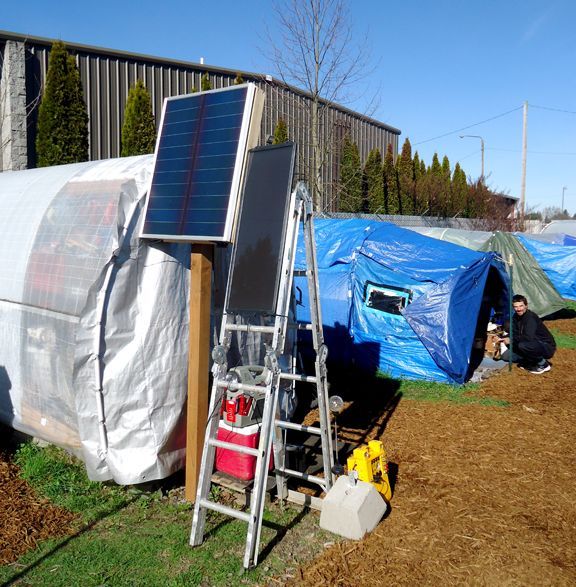
“And, he’s always saying, ‘Need anything for the camp? It’s yours.’” Items that Ray has taken back to the camp include one of the solar panels on his Hut, the lights in the central tent, several of the 12-volt server batteries that store the electricity, as well as assorted cabinets and tables.
And Ray is certainly appreciated by CSS’s de Buhr, “Ray doesn’t wait for somebody else to do things,” de Buhr says. “He won’t allow himself to be stuck by the situation. He’ll just go ahead and scrap things together.”
Ray says he didn’t really have a purpose in life until he moved into the Roosevelt Safe Spot and got reconnected with Jonathan.
“My purpose is kind of twofold,” he says. “To do what I can for the camp, and NextStep is included in that, and to help my son. He’s given me a purpose again. I lost that purpose because I did something stupid years ago and kind of broke my family up. My son is the one who stuck by me. We work together. We go to church together on Sundays. I get to try to be his dad again.”
Ripping away at a donated television at the NextStep workbench, Jonathan says he enjoys working with his father, that they function well as a team trying to keep up with the assorted electronics that NextStep sorters keep loading into a large wooden box next to them.
Jonathan is the main breadwinner for them now. He does odd jobs—walking the dog, mowing the lawn—for his grandmother. That not only gives them “pocket change” to go along with the food stamps they receive, it also contributed to the lighting and charging projects they’ve done for the camp, paying for the first solar panel and other materials not available from NextStep. “I help a little in the projects,” Jonathan says. “Normally, I provide the money, which I have very little of. And he provides the know-how.”
Ray’s know-how is based both on his education—he studied radio/television servicing at LCC right out of high school and he has an associates degree in culinary arts and food management—and a lifetime of work experience: “If you put everything I’ve done down on a resume, it would look like a phone book.
“Just because somebody’s homeless doesn’t mean he’s uneducated,” Ray says. “There’s a lot of people here that are very talented and very educated and they just got themselves into a situation that made them homeless—that’s what it is.”
Roy Nelson says he’s thankful to have Ray and Jonathan and Patrick Shipley at NextStep.
Roosevelt Safe Spot site manager Praise says that the experience of those three and the benefits that NextStep materials have brought to the camp might inspire others—including him—to volunteer at NextStep.
And Ray is thinking about upgrades and new projects. He’d like to change the halogen lights in the common tent to LEDs, which use less energy. He’s thinking about a solar array for a charging station and maybe even wiring in the whole camp. The other safe spot camps are watching with great interest to see if a similar set-up could work for them. And he’s trying to figure out how to regulate hot water use if the camp goes ahead with a proposed shower system. Nelson has a couple of tanks ready for him that might work. And Ray and Jonathan are thinking of signing up for Lane County’s Master Recycling Program. There’s lots of tinkering left to be done.
“I guess what makes me feel the best,” Ray says, “is being here with my son.