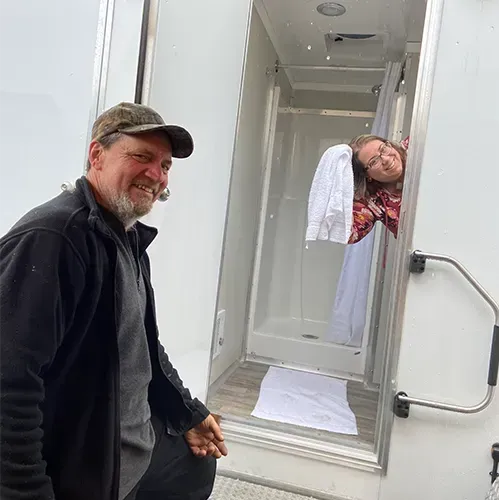
People who access CSS’s Service Navigation and Outreach Program have come from all walks of life and had a range of backgrounds and life experiences. This program was made possible through the coordination of localized funding through city contracts, one-time grants, and donations, and for the first time in nearly five years, was not funded through Lane County.
The story is unfortunately too common, and most Eugenians do not understand the implications of current funding availability and trends emerging at the State and Federal levels.
Most of the public has no understanding of what has happened at the local level and the immediate ramifications this will have on all of our community wide housing goals for years to come, local efforts to get people off the streets, and our organizations’ ability to sustain the workforce of qualified staff who have signed up to help local shelter organizations navigate, support, and house the nearly 1000 people enrolled in shelter programs across our jurisdiction.
In October 2025, and, at the dismay of county staff, nearly all shelter programs funded through Lane County reduced their shelter funding by margins up to 30%. The county laid off qualified government personnel and organizations lost case managers. In an effort to preserve beds, the shelter system lost case management professionals, dramatically impacting people experiencing homelessness’s access to qualified professionals who could help them navigate our housing systems and the rapidly changing benefits landscape.
This means more people are stuck on the streets and in shelters without the support they need to get out.
With these changes in funding, also came changes in expectations. Shelter organizations went from having to house 30% of leavers to just 5% of leavers, because without the ability to pay case management professionals, how could Lane County impose contracts with strict performance standards on shelters who have long been allies in helping people shelter and get housed?
At such a significant reduction, most organizations entered into conversations to determine if they could continue to operate, and we have seen project reductions, strategic mergers, and dissolution of programs all year. The reduction of resources means diminished efficacy for positive outcomes, but have been essential for organizations to maintain contractual compliance. Last fiscal year, we were insulated by restricted grants we acquired before the major community wide funding losses. This fiscal year, CSS revenue decreased and the budget has been reduced by 25%.
We have not seen the full impact yet, the funding has not returned to the picture, and there are predictable implications of shelter closures and a reduced amount of resources for housing services. More people will suffer, the local municipalities will likely not meet their targets for housing production, and slowing down rate of people entering into homelessness, and people who work in homeless services will have a less secure job market, likely deterring qualified professionals because of the sheer instability and their own risk of homelessness or loss of healthcare.
If you have not seen the current plan, you should review the litigation about the Department of Housing and Urban Development’s CoC Notice of Funding Opportunities and take a look at the Federal Government’s Executive Order 14321 Ending Crime and Disorder on America’s Streets. These artifacts will provide you insight on how people experiencing homelessness are being viewed and the trajectory of funding priorities in the United States.
If you would like me to save you the read, it can be summarized as “less funding for shelter and housing and less rights for people who do not have a home.”
At a presentation at the annual Housing Oregon Conference, our local CCO participated in a presentation titled, “Shredding the Safety Net - HR1, Medicaid, and Housing Providers,” and major the take away was the guidance to CCOs about benefits access is unclear, the funding is not coming, and people will lose benefits because of the HR1, the “Big Beautiful Bill.” This same CCO has been the administrator of grants, contracts, and capacity building projects which have built our local safety net, and with the closure of Pacific Source, loss of charitable foundations, and the reduced resources to support providers whose members are experiencing homelessness, the term “shred” was not used as an abstract metaphor but instead an astute observation about the damage to our community based service provider ecosystem and what is coming. It is real, it is happening, and our community needs to stay focused on its goals to help and house people experiencing homelessness.